2931 stories
·
0 followers

US banks have detected unvetted AI agents accessing customer bank accounts

1 Share
  • Customers are increasingly enlisting AI agents to handle banking jobs for them
  • Banks are struggling to distinguish between human, legitimate AI and rogue activity
  • Many are now preparing for worst-case scenarios when AI does go rogue

Several major US banks have detected third-party AI agents accessing their customers' bank accounts, sometimes even attempting to carry out actions beyond what users actually wanted them to do.

New Axios reporting has claimed banks are now said to be struggling to even distinguish between legitimate human activity and agentic activity – but especially between authorized and rogue AI agents.

Importantly, the concern isn't so much disconnected, rogue AI going after system vulnerabilities to obtain customer information – banks are currently worrying about AI agents that human users themselves are setting off on their behalves.

Banks are struggling to deal with an influx of customer-authorized AI activity

In many cases, customers are voluntarily providing their banking usernames and passwords to AI assistants to hand over some workflows and processes to them, however while customers may be prepared to share these sensitive details, it can often violate banks' policies – which require the customers themselves to log into the accounts.

Morgan Stanley, JPMorgan Chase, Bank of America and Citigroup have all started to restricted third-party agent access. Well Fargo is also said to be responding to potential threats.

Besides a lack of visibility and account security, banks are also worried about financial liability, because it's still unclear who's responsible for AI agents' activity if things go wrong.

Charles Schwab CEO Richard Wurster explained that he now expects a daily report about "how many ⁠times we've had to block one of the different agents" so that the bank has "control over ​authentication and the experience."

Looking ahead, banks are now likely scrambling to prepare for worst-case scenario events. With huge parts of the internet recently shut down due to outages and vulnerabilities, banks are now preparing to quickly shut down customer accounts in the event of unwarranted access – and restore them post-incident.

Google logo on a black background next to text reading 'Click to follow TechRadar'


Read the whole story
NerdsToGo
1 hour ago
reply
Share this story
Delete

Quest Diagnostics confirms data breach exposed patient records

1 Share
American clinical laboratory company Quest Diagnostics disclosed that patient records have been exposed after a threat actor gained unauthorized access to its Quanum LSM system. [...]
Read the whole story
NerdsToGo
2 hours ago
reply
Share this story
Delete

Microsoft: Windows Server 2016 reaches end of support in January

1 Share
Microsoft says Windows Server 2016 will stop receiving security updates after it reaches the end of support in January 2027. [...]
Read the whole story
NerdsToGo
2 hours ago
reply
Share this story
Delete

PHP security issues could also threaten your NAS device — but not every vendor is able to patch just yet

1 Share
  • Critical PHP2Shell flaws also impact internet-exposed NAS devices and PHP-based Docker workloads
  • Major vendors are still releasing patches, leaving some Synology, QNAP, and other systems exposed
  • Researchers urge immediate updates, removal of public exposure, and VPN-only remote access

Websites and web servers are apparently not the only products affected by the php2shell vulnerability - Network Attached Storage (NAS) devices are at risk, too - and to make matters worse, some of the most popular manufacturers have not yet released a patch, despite the flaws being actively abused in the wild.

Research by Apple Insider noted that the flaw also affects software maintained by NAS manufacturers, as well as applications running independently in Docker containers, with NAS devices that are reachable through the public internet also at risk.

What's particularly concerning is that some of the biggest NAS manufacturers have said to be working on a fix, but the work is yet to be done. Synology, for example, released a new security advisory saying PHP versions 7.3 - 8.4, Mail Station, and Synology Calendar are all affected and adding that it released updated PHP packages to address the flaws. Those running Synology NAS products should head over to the company’s Package Center and download archive and look for updated PHP 8.2 and PHP 8.4 packages.

Twofold risk

The company also stressed that there is a difference between installed PHP packages and PHP components within DiskStation manager, and added that its built-in PHP isn’t exposed to the public internet, therefore most likely not at risk.

Another major NAS manufacturer, QNAP, confirmed a wide range of affected products, including QTS 5.2.11 and older, QTS 6.1.9, QuTS hero and QuTScloud, and Note Station 3. It said it was currently working on a fix, but did not give a timeline on when the patch might become available. So far, there is no evidence of in-the-wild attacks, but the company does recommend removing the devices from the open internet, disabling unnecessary port forwarding, UPnP, and remote-access services.

Other manufacturers are also currently working on a fix, including TerraMaster, Ugreen, and Asustor, Apple Insider found. “NAS owners should check their manufacturer's security notices and available updates for their specific models,” the publication said.

For NAS owners, the risk is twofold, since PHP is found in both the operating system and Docker containers.

Those running PHP-based services in Docker should check if their container images are running affected versions of PHP, and update them as soon as humanly possible.

There is also the problem of running older devices that have reached end-of-life and are, as such, no longer supported with patches. These, security experts agree, should be removed from public access. Unsolicited inbound connections should be blocked, and the device should be kept accessible only locally. Remote access should be achieved through a secure VPN, instead of forwarding NAS management ports.

P2PShell?

PHP2Shell is a name for a pair of vulnerabilities - CVE-2026-109618 and CVE-2026-109619 - that were recently discovered in the PHP programming language. They are considered critical and allow malicious actors to take over websites, steal data, deploy malware, and more. However, the story that has so far revolved around internet sites and web apps is now expanding into NAS devices, too.

PHP2Shell is shaping up to be the biggest security incident of the year, and possibly longer, arguably rivaled only by the Spectre/Meltdown flaws from eight years ago.

The pair of vulnerabilities - both critical in severity and both allowing for remote code execution - affects the vast majority of websites and web apps in existence today.

Knowledge of the flaws leaked four days before the patches were released, according to Amazon, and the number of exploitation attempts went from a few hundred 10 hours before publication, to millions today.

However, most of these attempts seem to have been unsuccessful. Analysis is ongoing as to why that is the case, with some researchers thinking code execution needs to get past ASLR, which is a difficult thing to do remotely. However, breaking in only seems to be a matter of time, which is why the security community urges manufacturers to release a fix as soon as possible, and owners to apply them without delay.


Read the whole story
NerdsToGo
2 hours ago
reply
Share this story
Delete

Microsoft 365 accounts compromised at 79 organizations, no passwords needed

1 Share

An attacker who spent ten weeks replaying stolen Microsoft 365 sign-in sessions broke into email accounts at 79 organizations and used hidden inbox rules to keep victims from seeing parts of their own mail, according to Huntress. The researchers tracked the campaign between July 14 and September 22, 2026, counting 497 successful sign-ins and more than 200,000 failed login attempts. The stolen sessions were replayed from servers at 1337 Services GmbH, a hosting provider incorporated … More →

The post Microsoft 365 accounts compromised at 79 organizations, no passwords needed appeared first on Help Net Security.

Read the whole story
NerdsToGo
2 hours ago
reply
Share this story
Delete

Fake Reviews, Deceptive Ads: FTC Targets Alleged Passport Scam

1 Share

Government impersonation scheme

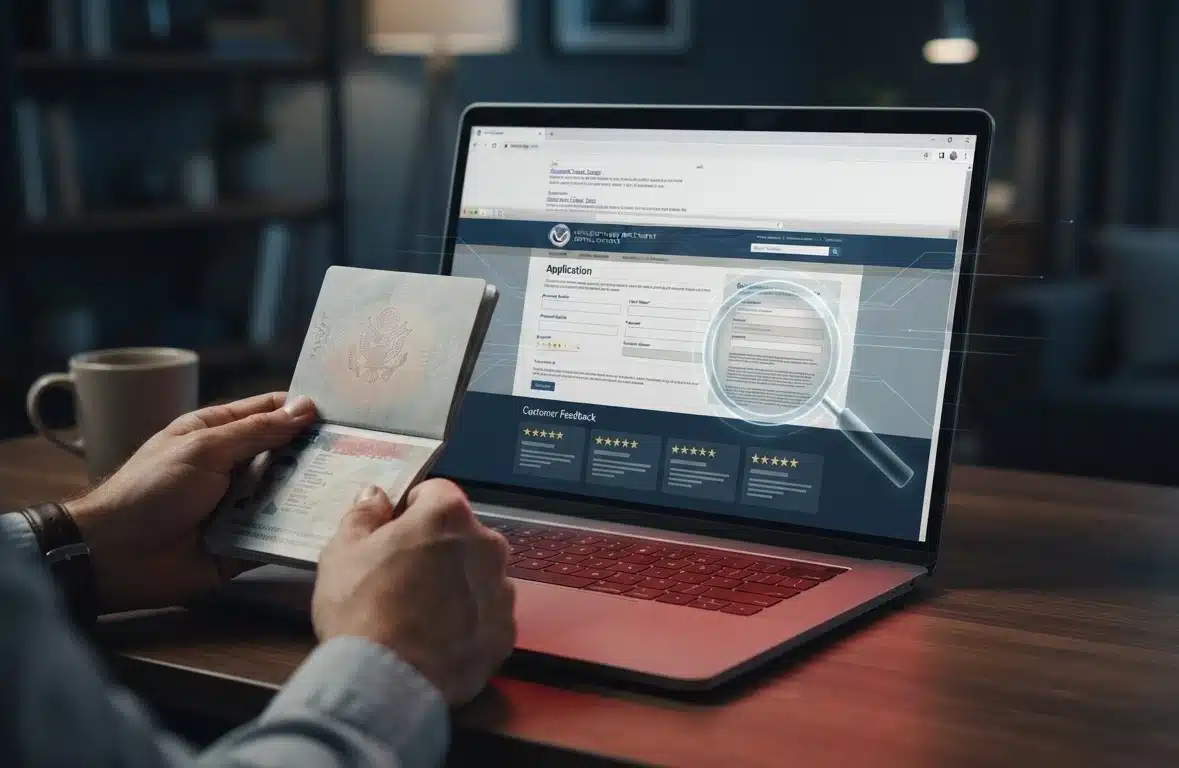
The Federal Trade Commission (FTC) has filed a complaint against GovAssist LLC, Entry LLC and Scott Zuckerman over an alleged government impersonation scheme targeting consumers seeking U.S. passport and travel-related services. The case highlights how paid search advertising, misleading service promises and allegedly fake customer reviews can be used to make commercial websites appear connected to official government services.
According to the FTC, the defendants allegedly used websites and sponsored search results to attract travelers, collect personal and financial information, and mislead consumers about the services they would receive. The complaint was filed in the U.S. District Court for the District of Puerto Rico.

How the Government Impersonation Scheme Allegedly Worked?

The FTC alleges that, since at least October 2023, GovAssist, Entry and Zuckerman operated websites including GovAssist.com, Entry.com and IVS.us, offering passport applications, passport-related services, visa applications and visa renewals. The complaint states that the websites presented themselves as affiliated with the U.S. State Department, although the defendants were neither the federal government nor authorized government-affiliated providers of passport-related services. The alleged operation relied on paid search ads to reach people looking for official passport information. Searches such as “apply for a new passport,” “passport renewal,” and “passport renewal online” routinely returned IVS.us and Entry.com pages among Google's top sponsored results, according to the FTC. This approach allegedly placed commercial services in locations where users might expect to find official government resources. The distinction matters because consumers searching for essential documents may not recognize that a sponsored result belongs to a private company rather than a government agency.

Misleading Passport Service Claims and Hidden Costs

The FTC alleges that the defendants made false promises about what their services could deliver, including claims that they could directly issue U.S. passports. In many cases, consumers allegedly received only a completed passport application that was available for free through the State Department's website. The complaint also challenges the companies' pricing disclosures. Although their advertisements or websites reportedly stated that services started at $89, the FTC alleges that the lowest available price was $119, plus a $29 shipping fee, bringing the total to $148. Consumers also needed to pay the State Department when submitting their passport applications. According to the complaint, the defendants prominently displayed their own prices while omitting or downplaying the additional government fee, potentially leaving customers unaware that they would have to pay again. Delivery claims are another part of the case. The FTC alleges that the defendants advertised expedited passport services promising delivery in as little as six to 10 business days or three to four business days. The agency contends these promises were false because the timelines were faster than the quickest expedited service available through the State Department, the only source of U.S. passports.

Fake Reviews and Consumer Trust

The complaint further alleges that the defendants used fake positive reviews to make their services appear legitimate. Their websites reportedly highlighted excellent ratings based on consumer feedback published on Trustpilot and other review platforms. According to the FTC, those ratings relied on high numbers of fake positive reviews. If established, the allegations would show how misleading reviews can reinforce the credibility created by sponsored search placements, making it harder for consumers to distinguish legitimate services from deceptive offerings. The alleged combination of deceptive ads and fake reviews is central to the case because consumers may rely on both search rankings and customer feedback when deciding which service to trust.

FTC Alleges Violations of Three Federal Laws

The FTC alleges that the defendants violated the FTC Act, the Impersonation Rule and the Gramm-Leach-Bliley Act. The complaint targets the alleged impersonation of government services, misleading representations about passport processing and pricing, and the use of false consumer reviews. Zuckerman, identified as the owner and sole member of GovAssist and Entry, allegedly operated the scheme while subject to an FTC order in an earlier, unrelated case involving Support King LLC. That case concerned stalkerware and resulted in a final administrative order addressing data privacy. The FTC said its staff received assistance from the U.S. Postal Inspection Service, the U.S. Attorney's Office for the District of Puerto Rico and the U.S. Department of State. The Commission authorized the complaint in a 2-0 vote.

What the Case Reveals About Online Consumer Fraud

The allegations illustrate how consumer fraud can exploit the gap between what users expect from an online search and what a website actually provides. A sponsored result may appear prominently, but its placement does not establish that the service is government-operated or officially authorized. The case also highlights the role of pricing transparency and review authenticity in online trust. Claims about faster processing, low starting prices, and positive customer experiences can influence purchasing decisions, particularly when consumers need time-sensitive travel documents. The FTC has emphasized that filing a complaint does not establish that the defendants violated the law. The case will be decided by the court. For consumers, the allegations underscore the importance of distinguishing official government services from third-party providers and checking fees, processing claims, and reviewing credibility before sharing personal or financial information. The FTC also states that it will never demand money, threaten consumers, instruct them to transfer money, or promise them a prize.
Read the whole story
NerdsToGo
2 hours ago
reply
Share this story
Delete
Next Page of Stories